Outcomes report: Fellow placements in 2025 and what it says about a more competitive tech job market
 January 30, 20266 min read

At Formation, we help software engineers land jobs by preparing them for the realities of today’s interviews. Our program focuses on real-world engineering skills, strong communication, and the kind of judgment and problem-solving that top teams look for when hiring senior talent.
We’re on a mission to build a more diverse and skilled engineering workforce by supporting engineers from all backgrounds and walks of life. While the past few years introduced significant volatility into the tech job market, 2025 marked a clear shift. Stabilization has returned, but competition has intensified, especially for experienced engineers targeting top-tier roles.
Across the full year, we saw a notable pattern emerge. More engineers already employed in solid roles chose to invest in themselves through the Fellowship, aiming to stand out in a tighter, more selective hiring environment. These Fellows weren’t chasing any job. They were targeting durable, AI-resilient roles at companies with strong engineering cultures and long-term growth potential.
We’ve continued evolving the Fellowship to reflect how interviews are actually conducted today. That includes a deeper focus on behavioral interviews, system design, navigating large and existing codebases, and developing fluency working alongside AI tools. Our 2025 placement outcomes show that this approach continues to work, even in a more competitive market.
We believe in sharing transparent data so engineers can make informed decisions about their careers, while preserving the privacy of our Fellows. If you’re considering joining the Fellowship, we hope these insights help you evaluate whether it’s the right next step. Everyone’s goals and circumstances are different, and our team is always happy to talk through yours.
With that, here’s what we saw across the full year of 2025*.
Sign up for our newsletter
Get the latest in tech right in your inbox
Fellowship data insights
Formation’s mission is to help build the diverse engineering workforce we want to see in the world.
That means working with engineers spanning a wide range of backgrounds, education paths, and career stages. We’re proud to support Fellows at different points in their journey as they land meaningful new roles.
- $88,895 was the average increase in first-year total compensation for Fellows. This figure is slightly lower than earlier periods, largely because more Fellows entered the program with higher existing base salaries, with the average base salary being $125,000. In other words, outcomes remained strong in absolute terms, even as relative jumps narrowed — a sign of a more competitive market and a more senior audience.
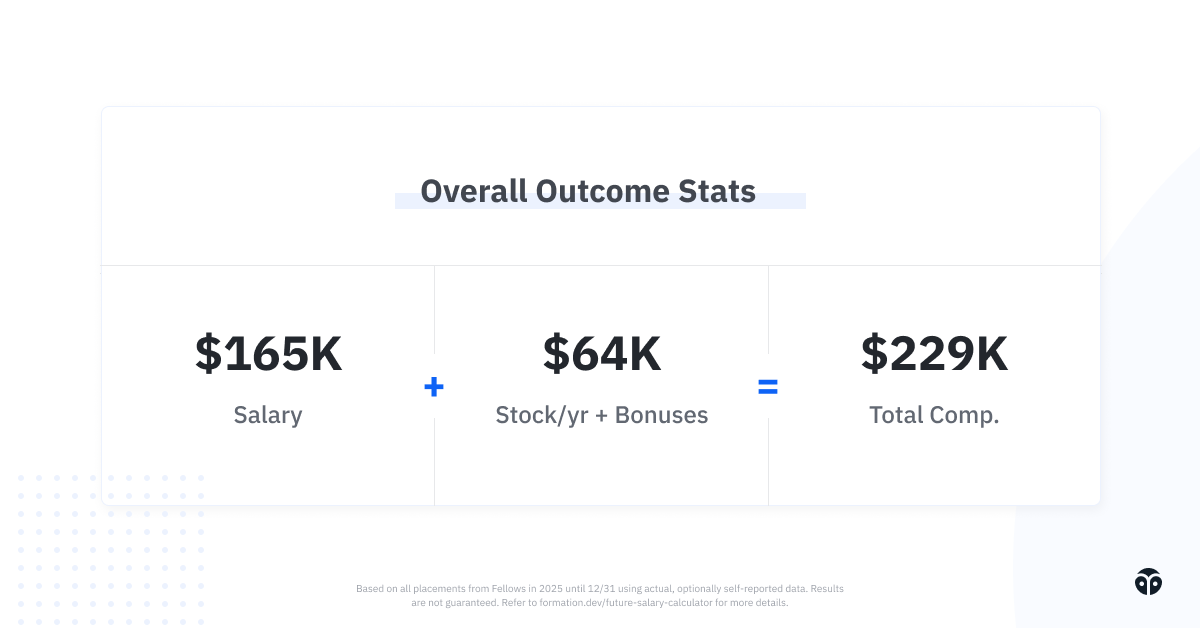
- Overall first-year total compensation outcomes remained strong at $228,862 on average. Despite a modest decrease in average increases, Fellows continued to land roles with comparable total compensation to earlier periods. This reflects a shift in who is joining the Fellowship: more experienced engineers already in well-compensated roles, seeking strategic moves.
- 45% of the 2025 placements had 5+ years of full-time software engineering experience. This represents a 14% increase from prior years and reflects a continued shift toward more senior Fellows with deeper experience and higher expectations.
- Equity and signing bonuses decreased slightly year over year. The largest factor contributing to smaller overall increases, other than higher starting salaries, was a pullback in equity and signing packages. In a more competitive hiring environment, companies appear to be negotiating less aggressively on equity, which is historically one of the easier levers to pull. Base compensation remained relatively strong, especially for experienced engineers.
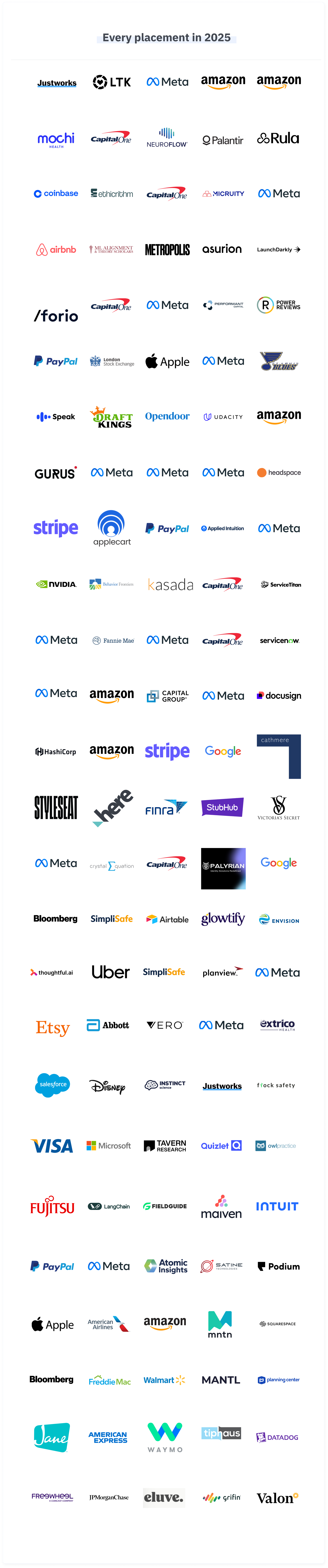
- Roughly two-thirds of placements were at top-tier tech companies. We define top-tier companies as engineering-driven organizations offering competitive compensation, strong technical environments, and meaningful growth opportunities. Fellows placed across a broad range of these companies, including Meta, Google, NVIDIA, and Amazon, reflecting both diversity of background and breadth of opportunity. The full list of the companies where Fellows were placed is below.
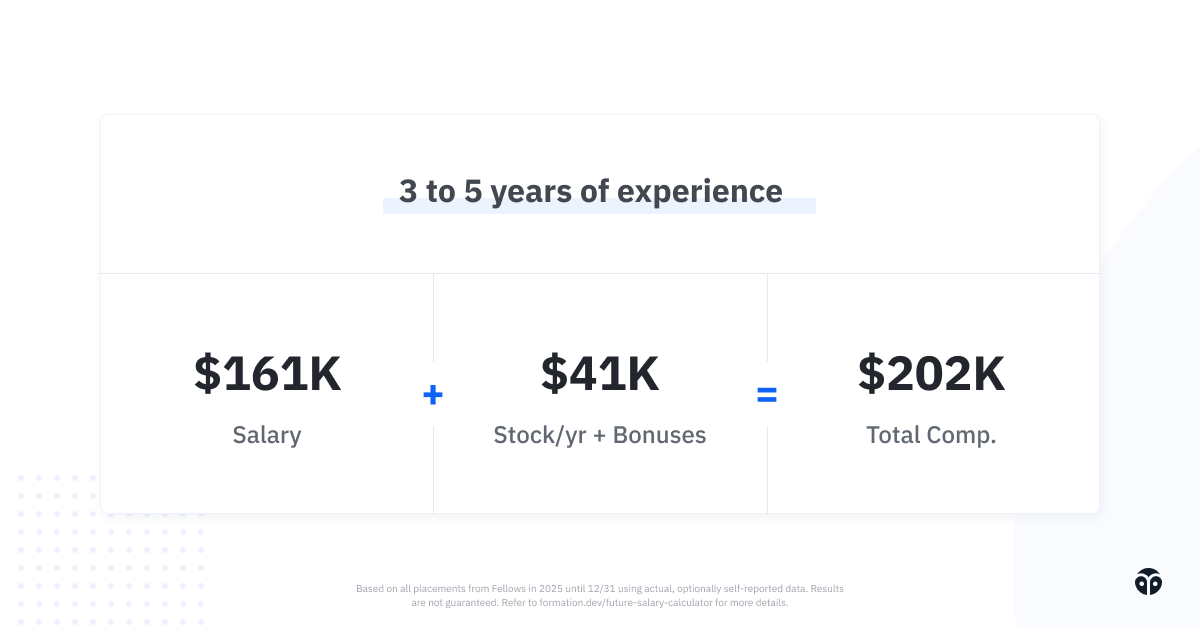
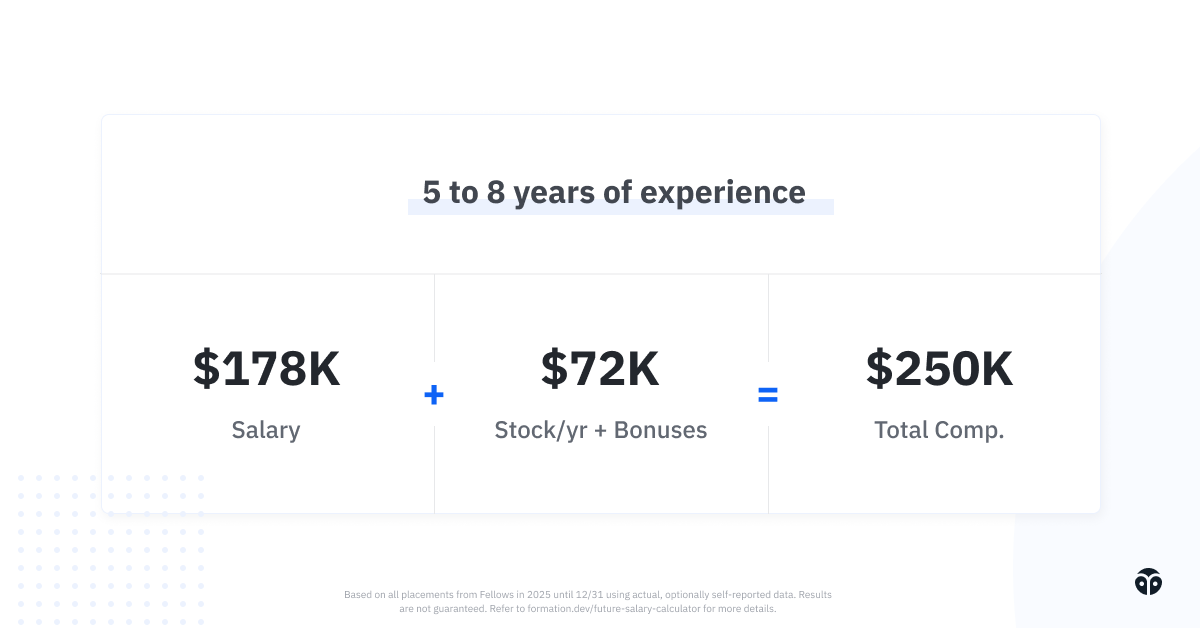
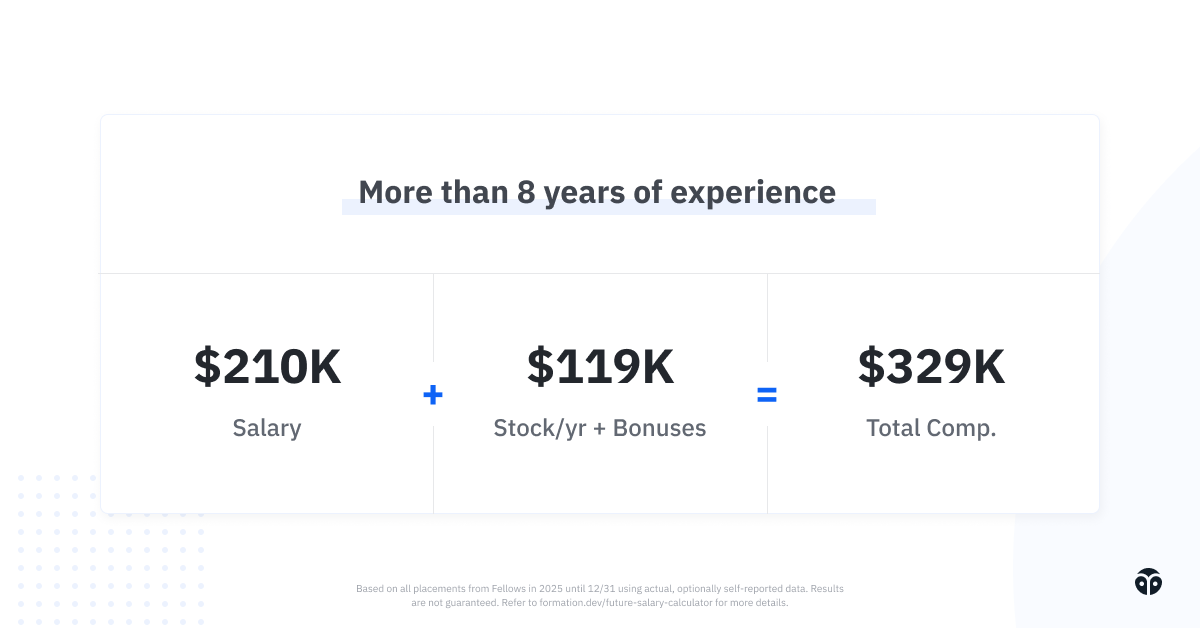
Fellows’ first-year compensation after placement
One advantage of a fully remote Fellowship is the ability to support engineers across many geographies. As a result, compensation outcomes vary depending on location, company, and role structure.
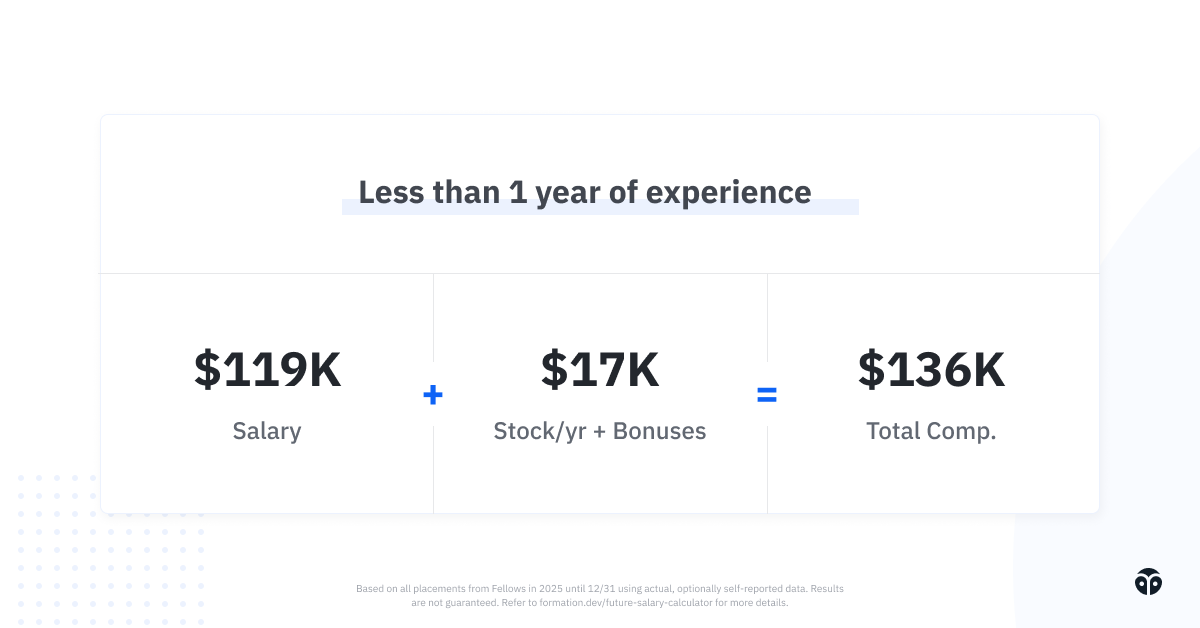
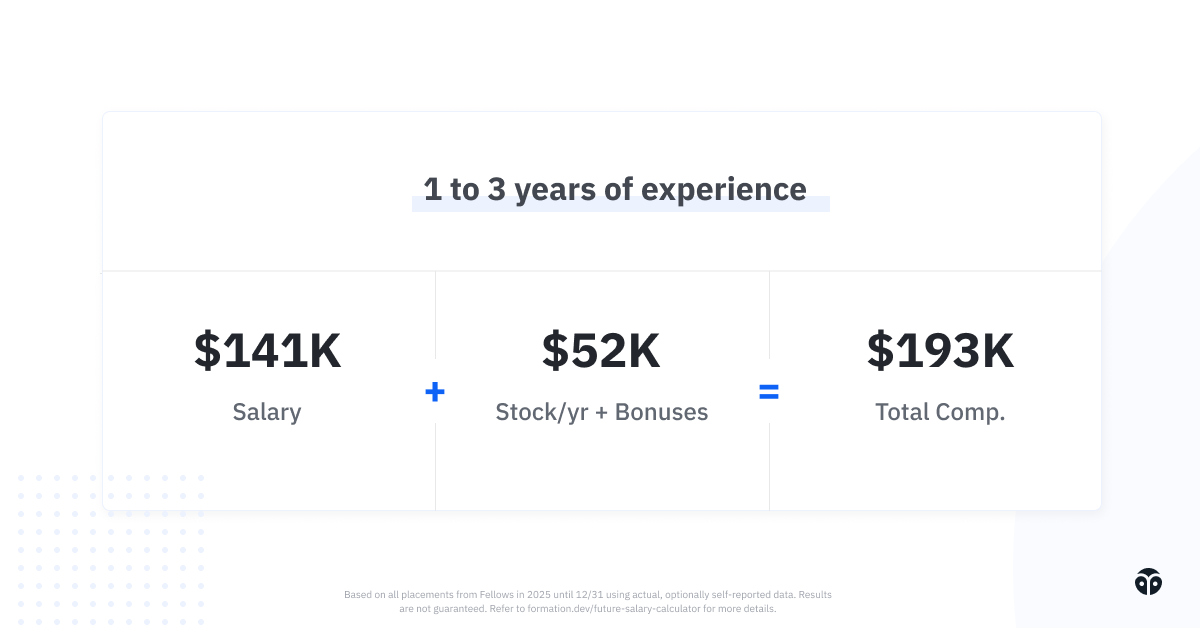
For consistency, we calculate first-year total compensation using base salary, bonus, signing packages, and equity vested in the first year only. Long-term equity upside is not fully captured here, particularly for senior engineers.
We aggregate outcomes to preserve Fellow anonymity, but after you apply, we go further — sharing anonymized and rounded results from past Fellows with similar backgrounds to help set realistic expectations.
Tech industry trends we observed in 2025
Looking at Fellowship outcomes alongside broader industry data, several trends stood out over the full year.
- The market stabilized, but competition increased. Layoffs largely normalized after early-year fluctuations, but hiring remained selective. Companies were slower to hire, more deliberate in leveling, and less flexible in negotiations. This raised the bar across interviews, especially for senior roles.
- More employed engineers invested in differentiation. A growing share of Fellows joined while already employed, seeking an edge in a crowded market. This reinforces a key theme of 2025: engineers with strong fundamentals are increasingly investing in interview readiness, communication, and AI fluency to access top-tier opportunities.
- AI literacy continued to separate candidates. Even in non-AI roles, engineers who could demonstrate comfort working with AI tools — and explain tradeoffs, limitations, and integration choices — were hired faster and compensated more competitively.
- Hybrid and in-office roles remained dominant. While remote work still exists, the majority of new placements were hybrid or in-office. Fellows open to flexibility generally had access to a broader set of opportunities.
- Capital markets showed signs of life. IPO activity and late-stage funding began to re-emerge, particularly in AI, infrastructure, and productivity tooling. Importantly, many of these companies showed real revenue traction, not just speculative growth.
What this means for 2026
Looking ahead, the signals from 2025 point to a tech job market that is more stable, but structurally different.
- Interviews will continue to favor judgment over raw execution. As teams remain lean, hiring managers are prioritizing engineers who can operate independently, reason through ambiguity, and make sound tradeoffs. Expect interviews to place even more emphasis on decision-making, communication, and ownership.
- AI fluency will move from an advantage to a baseline expectation. In 2025, AI literacy helped candidates stand out. In 2026, it will increasingly be expected. Engineers who can explain how they use AI tools thoughtfully, verify outputs, and integrate them into real workflows will be better positioned than those who either over-rely on AI or avoid it entirely.
- Competition will remain highest at the senior level. The trend of experienced, currently employed engineers investing in differentiation is likely to continue. More senior candidates will compete for a similar number of high-quality roles, raising expectations for clarity, scope, and interview readiness.
- Compensation growth will be more selective. While overall compensation remains strong, especially for experienced engineers, outsized increases may be harder to achieve through negotiation alone. Engineers who can demonstrate clear impact, leadership, and long-term value will have the most leverage, particularly in equity-heavy offers where upside plays out over time. High performance on the job will be a larger opportunity for compensation growth than ever before.
For engineers preparing for a job search in 2026, the takeaway is straightforward: the fundamentals haven’t changed, but the bar has moved. Strong preparation now means sharpening judgment, improving communication, and staying fluent in the tools shaping modern engineering work.
Get holistic interview prep with Formation
Even in a more competitive market, Formation Fellows continued to land life-changing roles.
Our mentors come from top engineering organizations, and our Fellowship is built around how interviews actually work now. Through personalized coaching, technical mentorship, and a strong peer community, Fellows prepare for interviews that emphasize judgment, communication, and real-world decision-making.
As competition increases, especially at the senior level, we focus on what differentiates candidates today, like explaining impact clearly, reasoning through tradeoffs, and showing ownership in ambiguous situations. We also help Fellows articulate how they use AI tools thoughtfully as part of real workflows. With guidance from engineers and recruiters who see these patterns every day, the Fellowship is designed for a more selective hiring market.
If you’re navigating a competitive job search and want support from engineers, recruiters, and coaches who understand today’s hiring landscape, we’d love to talk.
*These numbers are accurate as of our most recent update and reflect Fellows who submitted placement data during the 2025 calendar year. See full details on how outcomes are calculated and important disclosures here: https://formation.dev/terms/#outcomes



