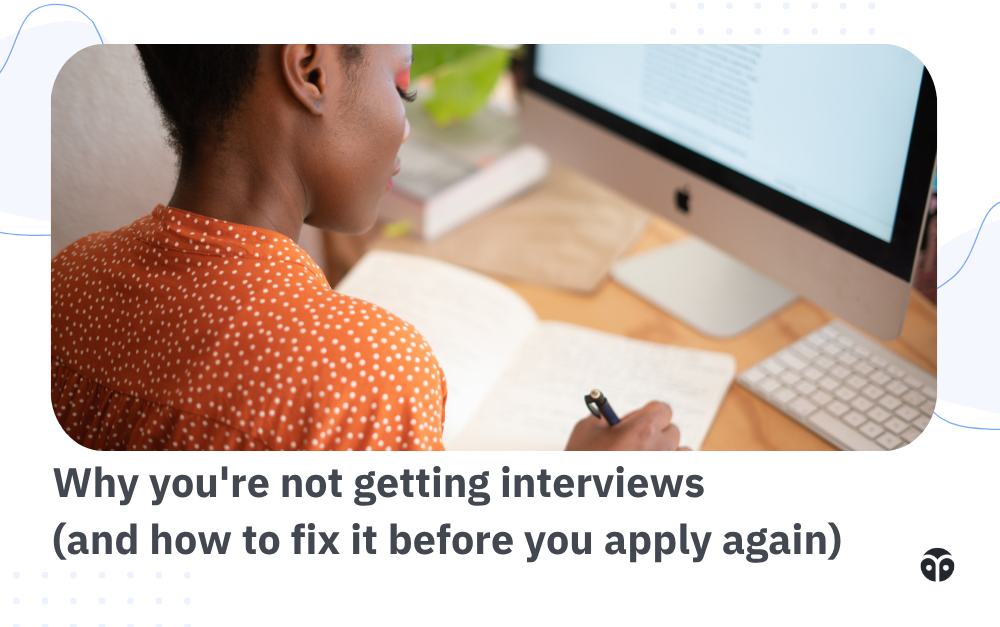
Here's why you're not getting interviews (and how to fix it)
Most engineers aren't getting callbacks because their resume can't answer one question. Here's how to find the through-line that changes that.
The job market is competitive, and the instinct when applications go quiet is to send more of them. For most experienced engineers, that's not the fix. Applying to 100 jobs with unclear positioning produces roughly the same result as applying to 50 with unclear positioning.
The thing missing usually isn't the tech on your resume. Almost every engineer at your level has touched the same handful of languages and frameworks. Listing them doesn't tell a recruiter why you specifically are worth a call.
What does differentiate you is the kind of engineer you've become, showcasing the problems you gravitate toward, the work your managers keep handing you, and the kinds of products and users you've ended up around.
Most engineers at the senior level have the same languages and frameworks on their resume. What sets you apart is the kind of engineer you’ve become.
Join us for a LIVE workshop that helps you find that through-line, name it, and walk away with a one- or two-sentence answer to “what kind of engineer are you?” that sharpens your TMAY, resume, and interview stories.
Why applying to more jobs isn't getting you more interviews
Recruiters move fast. A single role at a well-known company can pull thousands of applications in a week. At that volume, a recruiter isn't reading carefully, they're scanning for a clear case. If they can't immediately answer "what kind of engineer is this person and why do they fit this role," the resume doesn't move forward.
The engineers who convert applications to interviews at a higher rate tend to have something the others don't: a legible positioning. Their resume makes a specific case. A recruiter can represent them to a hiring manager in one sentence. That's harder than it sounds, and most resumes aren't doing it.
Why your tech stack isn't helping you stand out
Take a group of experienced engineers at roughly the same level and ask them to raise their hand for every technology on their resume. JavaScript, Python, React, SQL, AWS, TypeScript, Kubernetes. Most hands go up for most items.
Tech stack is table stakes. Everyone applying to the same roles has touched the same tools. The recruiter isn't passing because you're underqualified. They're passing because they can't make the case for you internally.
Sign up for our newsletter
Get the latest in tech right in your inbox
How to find your engineering through-line
The fix isn't a resume rewrite. It's figuring out what the resume should actually be saying, then lining everything up behind it.
You're looking for a one or two-sentence answer to "what kind of engineer are you?" that's specific enough a recruiter could repeat it to a hiring manager without losing anything. A few questions that help surface it:
- What kinds of problems do you seek out on your team? Not what you're assigned, but what you volunteer for and find yourself thinking about off the clock.
- What does your manager tend to hand you specifically? Managers route work to people they trust with it. The things that keep landing on your desk signal what strengths are already visible in you.
- What do the users or products of the things you've built have in common? Sometimes the through-line isn't about technical domain at all. It's about the kind of product, the stage a company is at, or the kind of user you keep building for.
- Where have you done your best work? Not your most impressive title, but the work you'd want to do again.
If you're currently between roles, answer these from past positions. The goal is to identify what's true across your career, not just your most recent job.
How to use your through-line to get more interviews
Once you can answer "what kind of engineer are you?" clearly, a few other things start to fall into place.
- Your resume targeting gets sharper. You can look at a job description and quickly assess whether your through-line is actually a fit, and skip the applications where it isn't. Fewer applications, stronger cases.
- Your tell me about yourself opener becomes more useful. Instead of a march through your job history, it becomes a story organized around the through-line, which lands better with recruiters and sets up the rest of the conversation.
- Your story selection in behavioral interviews improves. When you have a clear positioning, you have a filter for which examples to reach for. You pick the stories that reinforce it instead of the ones that scatter it.
Get support before your next round of applications
Formation Fellows work with mentors and technical recruiters to sharpen their positioning before they start applying. If you want structured support working through it, learn more about the Formation Fellowship.
Frequently asked questions
Why am I not getting callbacks from job applications?
The most common reason experienced engineers don't hear back from applications isn't a lack of qualifications. It's unclear positioning. When a recruiter can't immediately describe what kind of engineer you are and why you fit the role, the application doesn't move forward.
How many jobs should a software engineer apply to?
There's no universal answer, but engineers who apply to fewer roles with sharper targeting tend to convert at a higher rate than those applying broadly with a generic resume. The goal is quality of positioning, not volume of applications.
What makes a software engineer's resume stand out to recruiters?
A resume that makes a specific, legible case for a particular type of engineer. Tech stack alone doesn't differentiate candidates at experienced levels. What stands out is a clear through-line: the kind of problems you solve, the work you're known for, the pattern across your career.
What is a through-line on a software engineering resume?
A through-line is a one or two-sentence answer to "what kind of engineer are you?" that's specific enough a recruiter can repeat it to a hiring manager. It's the common thread across the problems you've worked on, the strengths your managers rely on, and the work where you've done your best.
How do I improve my interview conversion rate?
Start by auditing whether your resume makes a specific case for a particular type of engineer, or whether it reads as a generalist profile. Then assess whether your TMAY opener and behavioral stories reinforce that positioning or scatter it. If your application volume is high and your interview rate is low, that gap is usually a positioning signal.